Compare
Paldar vs Paperbell
How Paldar differs from Paperbell, when Paperbell is the better choice, and why one runs a solo coaching business while the other runs development programs and measures them.
11 November 20264 min readBy Jonah Cacioppe, assisted by Claude

Paperbell and Paldar are both tools for coaches of all types - leadership coaches, executive coaches, health & wellness coaches and life coaches. Both help coaches manage scheduling, video links and client communication in one place. Paperbell is built for solo coaches selling their own online coaching programs: it provides a simple website, coaching packages, payments, contracts and booking in one flat plan, so a client can find you, pay and book without you stitching too many tools together.
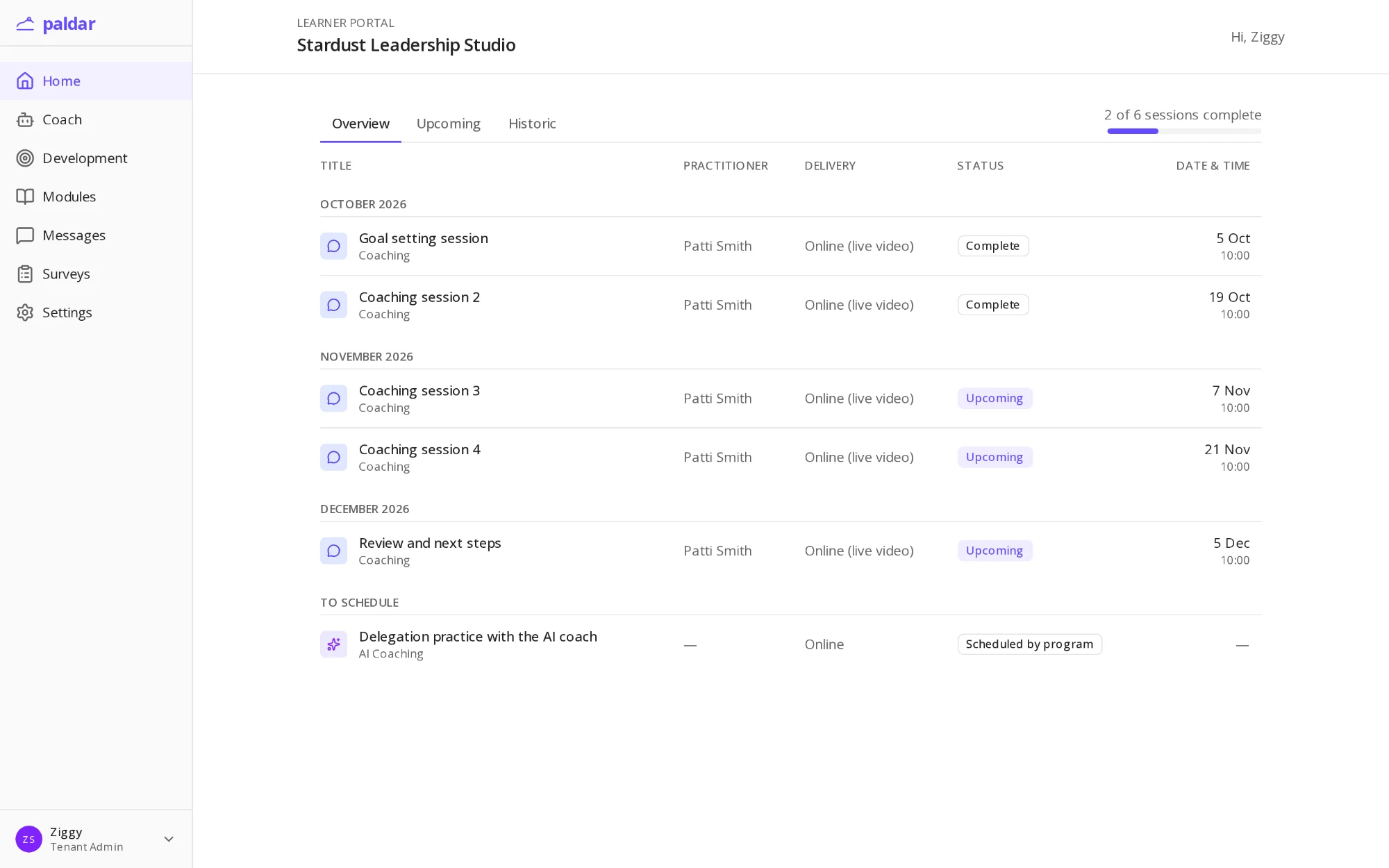
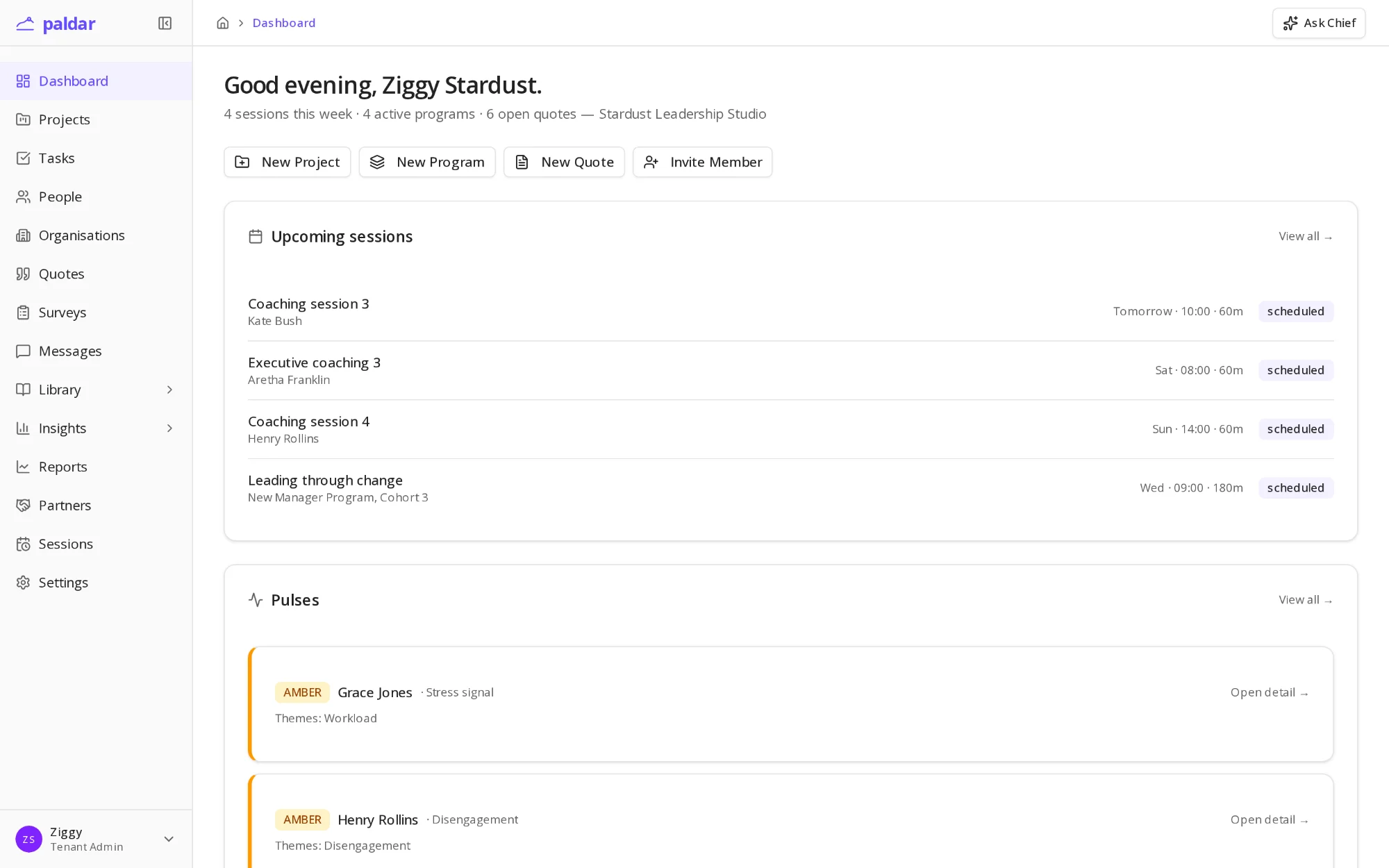
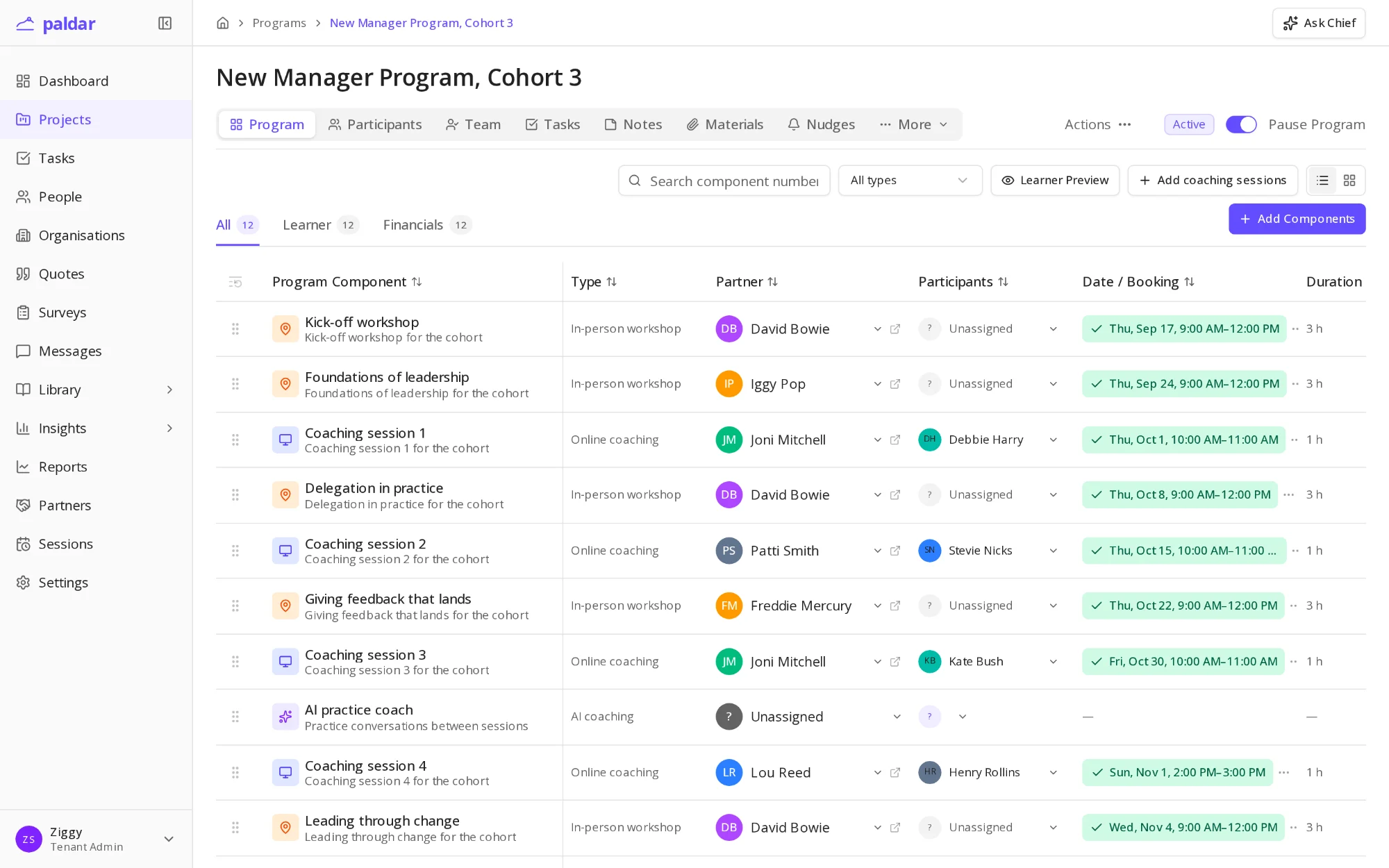
Paldar is built for solo coaches but also supports small coaching teams, larger learning and development practices and internal L&D teams - help teams collaborate to design and deliver blended programs, with several practitioners, and need to measure outcomes. It also support a wider range of intervention types including group workshops, 1-on-1 coaching, surveys and 360 feedback tools, digital content and lessons and AI support for your learners. Paldar is also focussed on AI tools to support you with an AI Chief of Staff for your team, and a customisable AI Coach for your learners.
So the question is not which product is better. It is whether you just need a simple straightforward tool to manage and book your own 1-on-1 coaching sessions, or need to run blended programs with AI-led interventions and capability measures for your learners and clients.
| Feature | PaldarTeam plan | Paperbell |
|---|---|---|
| Design and run | ||
| Program designer and templates | Coaching packages | |
| Unlimited projects and programs | ||
| Program components | ||
| Workshop | Group coaching | |
| Coaching | ||
| AI coaching | Paid Learner Plan | |
| AI Coach Email | ||
| Coach | ||
| Coach emails and nudges for learners | Reminder emails and SMS | |
| Surveys | ||
| Multi-rater 360 | Upcoming | |
| Pulse | Upcoming | Intake and check in forms |
| Outcome measure | Upcoming | |
| Survey reports and dashboards | Upcoming | |
| Scheduling and communication | ||
| Calendar booking with Google and Microsoft 365 | Google, Outlook and iCal | |
| Video sessions on Google Meet and Microsoft Teams | Zoom and Google Meet | |
| Agent email on your own domain | Enterprise | |
| Practice management | ||
| Proposals, quotes and deals | Package checkout, no quotes | |
| Join the waitlist |
What Paperbell is good at
An excellent tool for solo coaches. Paperbell gives each coach a website with scheduling, payments, messaging and a client portal built in, and pitches itself as a replacement for the separate website, booking, form, contract and payment tools a coach would otherwise pay for. Clients get a portal automatically, without creating a password, where they buy more sessions, book, fill out forms and open materials.
Flexible ways to get paid. Coaches can create packages that mix 1-on-1 coaching and group sessions, and Paperbell supports payment plans, subscriptions, pay in full discounts, deposits, coupon codes and pay what you can pricing through the coach's own Stripe or PayPal account. Contract signing is part of the booking flow.
The everyday admin of a coaching business. Paperbell handles self scheduling with buffers and time zone handling, calendar integration with Google, Outlook and iCal, Zoom or Meet links added to both calendars, reminder emails and SMS, intake forms, post session feedback, check in surveys, private and shared notes, and digital downloads that can be released over time.
A simple, published price. Paperbell lists $97 a month, or $970 a year, with every feature, unlimited clients and no Paperbell transaction fee (Stripe or PayPal still charge their own). It offers a free account to start and a 30 day money back guarantee.
If you are an individual coach who wants a professional site and booking, payment and paperwork handled in one subscription, Paperbell is a strong choice.
Where the fit is harder
A package is not a program. Paperbell sells bundles of sessions, classes and content to individual clients. A program of your own design, with workshops, coaching, surveys and reminders laid out for a whole cohort over a quarter, and each intervention linked to the capabilities it is focussed on changing, is not what it Paperbell is built to manage.
No measurement of change. Paperbell's forms collect intake answers, session feedback and check ins. We found no 360 feedback, capability assessment, or baseline and follow up reporting across a group, which is what an organisation buying learning and development really needs to measure behaviour change and thier ROI for an L&D program.
Minimal Collaboration. Paperbell is excellent for coaches with individual clients. It's not great for collaboration between several practitioners delivering one engagement eg. a facilitator and 2 coaches; or for supporting programs with many participants.
No AI support between sessions. Paperbell's automation is reminders and email workflows, and does not use AI to support on-demand coaching or dynamic personalised messages.
What Paldar is built around
Your program, your people. In Paldar you can design programs with a wide range of interventions: workshops, coaching sessions, surveys and 360s, online content and lessons, reminders and personalised AI-generated nudges. You can run programs for 1 participant or 30, and Paldar's automated workflows help you invite participants, schedule sessions with booking on Google and Microsoft 365 calendars and video sessions on Google Meet and Microsoft Teams; and measured from your outcomes.
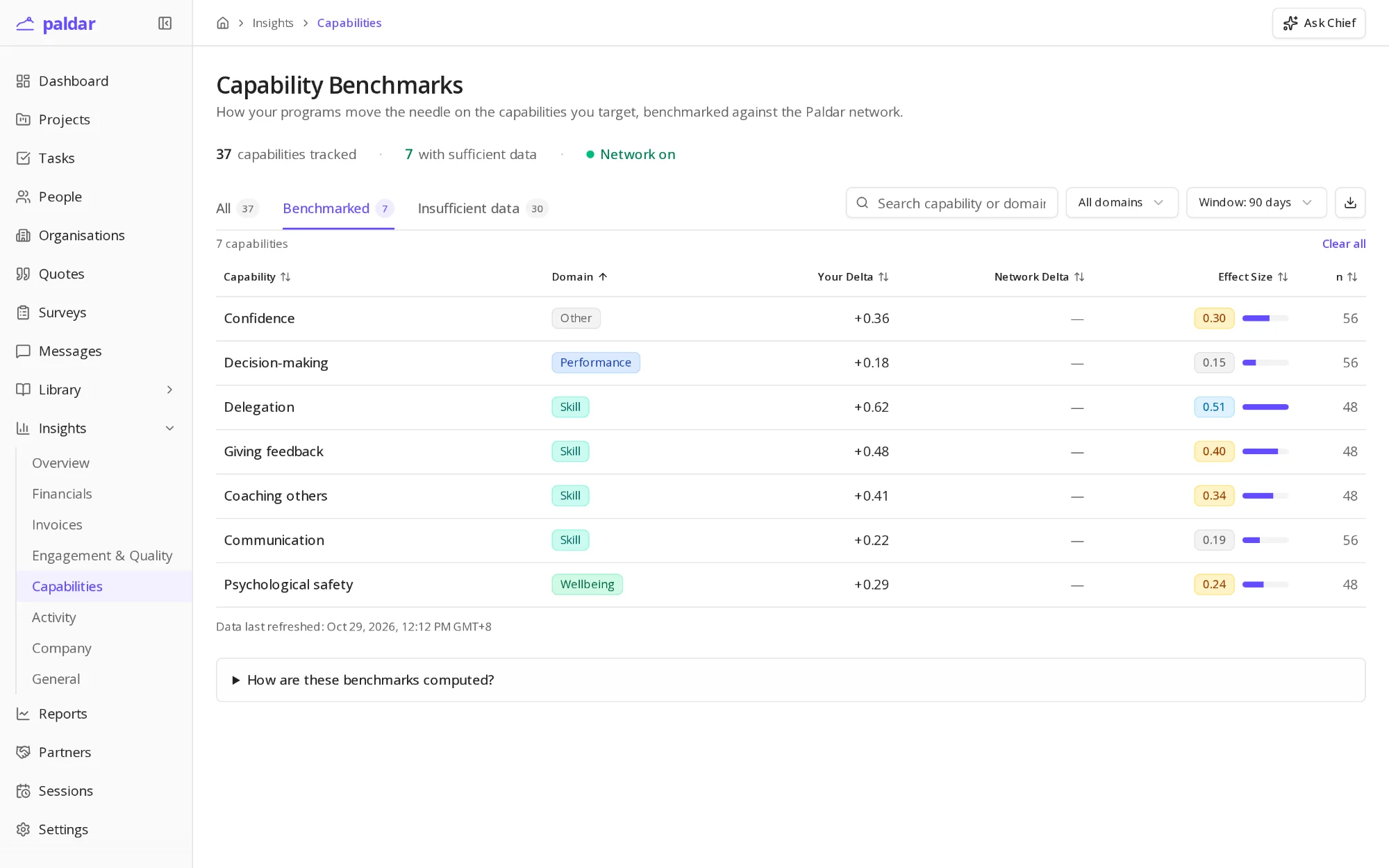
Flexible Tools to Measure outcomes. Paldar has a range of standard surveys and 360s mapped to capabilities, so you can easily measure program outcomes, compare changes from your baseline and compare your client, organisation or cohort's capabilities against our global benchmarks.
AI between sessions, under your control. Paldar's AI Coach supports each participant between sessions by email or in the learner portal. You can customise the Coach's messages, schedule nudges and the context it uses to message or respond to learners.
The business around the work. For an in-house L&D team or L&D practice Paldar has all the tools you need to manage your day-to-day operations - proposals, quotes, a basic CRM, team scheduling and loads, and project financials all sit alongside the program delivery and participant management.
Choosing between them
Choose Paperbell when you are a solo coach selling your own sessions and packages to individual clients, and want your website, booking, payments and contracts handled for one flat monthly price.
Choose Paldar when you design and deliver development programs for organisations or your own workforce, with several practitioners, and want one place to run them and prove they changed behaviour.
Related reading
All comparisons →