Chief at Paldar
A chief of staff for the practice
Chief drafts the scheduling, the comms and the follow-ups, notices when a learner goes quiet, and writes the progress note before the client asks. You approve. Every action is on the record.

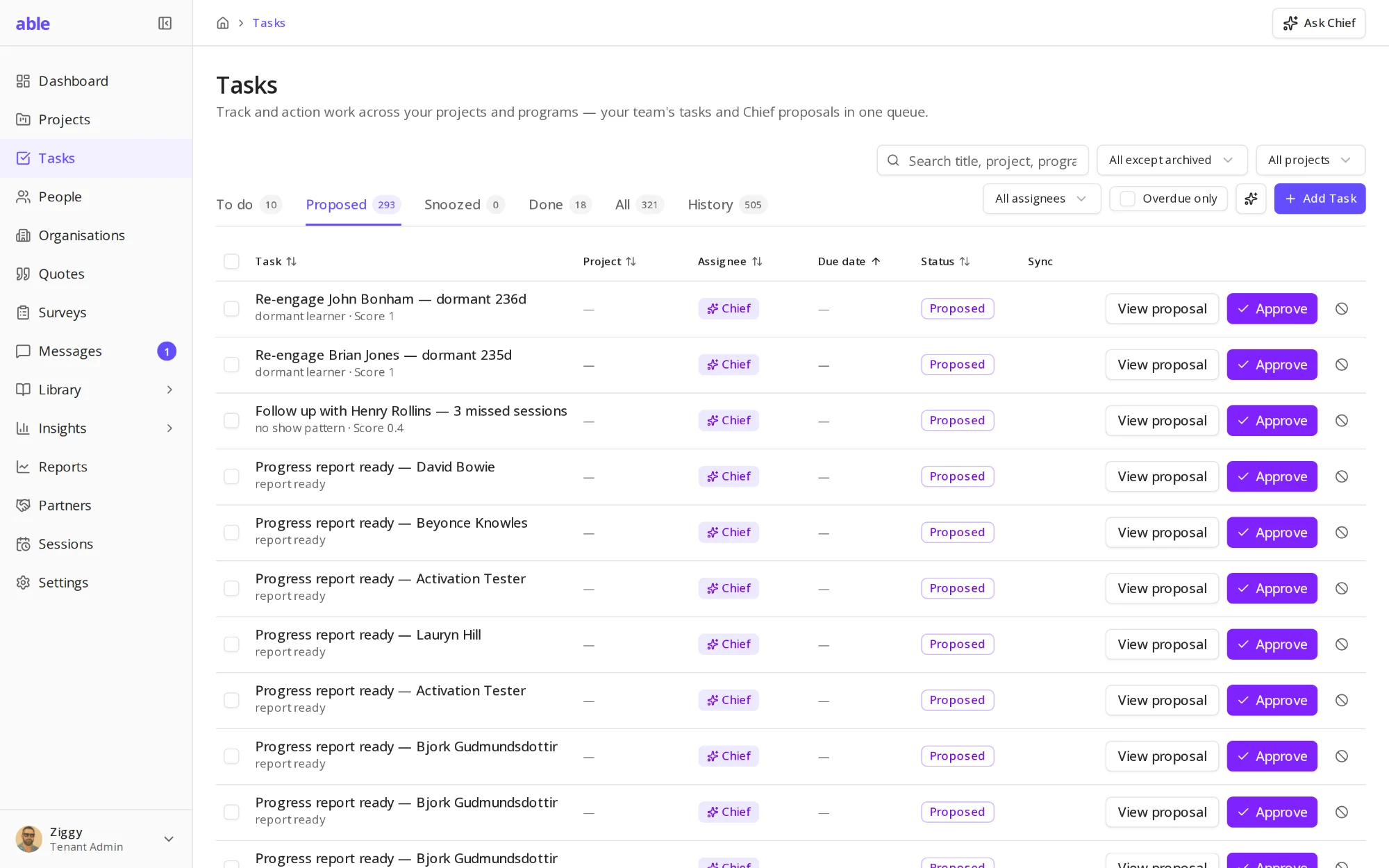
Drafted overnight from the program record. Nothing is sent until you approve it.
Proposals, not actions
It suggests; you decide
Chief works from your task list. A rescheduled session, a progress note, a nudge to two learners who missed a week: each arrives as a proposal with its evidence, and you approve, edit, snooze or dismiss it. Routine proposals can be set to run on their own; anything touching wellbeing or money never is.
Chief reads the whole practice every night. Nothing is sent until you approve it.
Noticing
It reads the whole practice every night
Dormant learners, unbooked sessions, surveys nobody answered, a cohort drifting behind its plan. The morning digest lists what changed and what it proposes to do about it.
Agents act only through approved proposals, so every line here names a person.
On the record
Every message and every decision is logged
Each proposal keeps its dossier: what was noticed, what was proposed, who decided, and what happened. When a client asks why a session moved, the answer is one click away.
Principles
How it behaves
- You approve
- Nothing sensitive is sent without a person saying yes.
- Explains itself
- Every proposal carries the evidence it was made from.
- Dials, not switches
- Autonomy is set per kind of task, from suggest-only to run.
- Hard limits
- Wellbeing and payments always escalate to a human.

Join our founding cohort
Be part of our first cohort of users reimagining learning & development.